

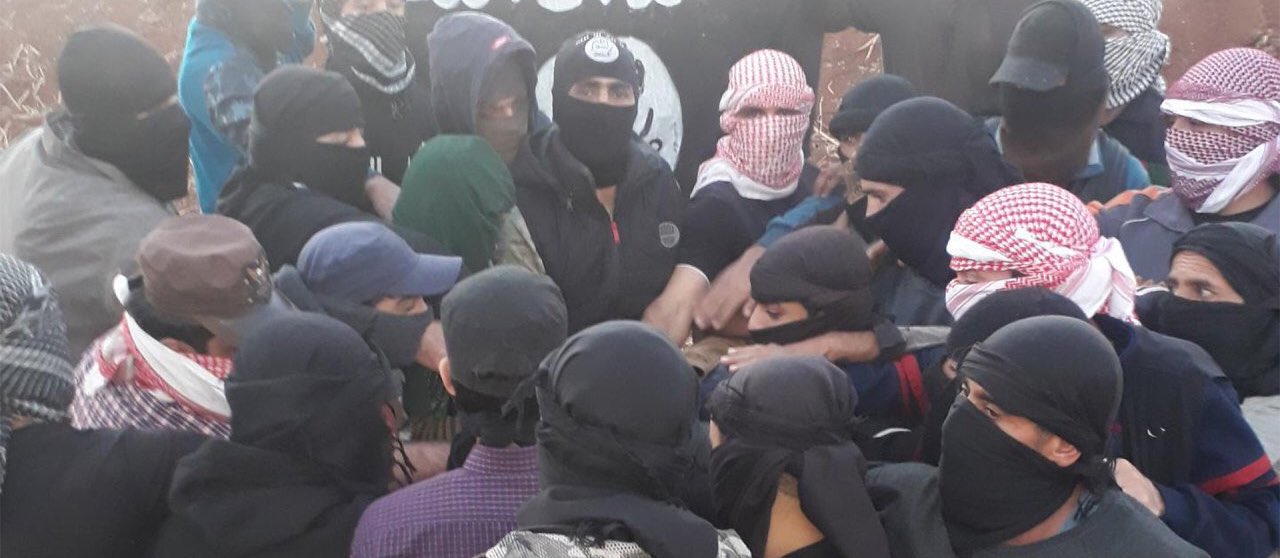
Overshadowed by the developments along the Turkish-Syrian border, Idlib, and the on-going uncertainty around the United States’ withdrawal from Syria, the southern Syrian province of Daraa has been experiencing a steady uptick of insurgent attacks over the course of recent weeks.
News of an insurgency in the region is nothing new. Daraa has been a hotbed of insurgent activity since the Syrian Arab Army (SAA) took full control of the province from the Syrian Opposition in the summer of 2018. These attacks have usually been claimed by or been otherwise attributed to the Popular Resistance, which is believed to be made up of former fighters of the Free Syrian Army (FSA) who did not wish to sign reconciliation agreements with the Syrian Government or be moved to Idlib. However, the most recent bout of attacks was not claimed by the Popular Resistance but rather by the Islamic State (IS).
IS-claimed attacks in Daraa have picked up significantly since late-October. In particular, the group claimed two IED attacks against the SAA on the 24th October; the killing of an SAA intelligence official in Inkhil; the killing of an informant (described as a member of the Lebanese Hezbollah in the group’s statement) in Muzayrib on 5th November; and an IED attack on a bus carrying SAA soldiers in Rakham, along the provincial border of Suweida. Militants of the group were also among those that pledged allegiance to the new leader of the IS, Abu Ibrahim al-Hashimi al-Qurayshi. Notably, two IS-affiliated groups seemed to exist, with one based in the town of Inkhil and the other representing the wider Levant and Houran (Daraa, Quneitra, southern Damascus) regions.
The existence of an IS insurgency in Daraa is not all that surprising. The group existed in some capacity in the form of Jaish Khalid Ibn al-Walid (JKIW), a jihadist group affiliated with the IS that formerly controlled several towns along the Yarmouk Basin on the border with Jordan. The SAA took control of these areas in the summer of 2018 with little fighting and no official reconciliation agreements, leading to speculation that most of the militants went underground. Indeed, this is a tactic that the IS followed in other parts of Syria and Iraq.
The existence of the IS in Daraa, however, raises concerns for the already-tenuous state of security and stability in the region. The immediate risks presented by an on-going IS insurgency is self-evident, as exemplified by similar insurgencies taking place in Syria’s Deir ez-Zour Province and across Iraq. However, the IS insurgency could also have a series of knock-on effects.
For instance, escalating IS attacks could compel the Syrian Government to send more troops into the region or otherwise institute a clampdown, targeting former members of the rebel factions who represent the most obvious targets. With many former rebels already unhappy with the way the reconciliations are being handled – or otherwise not being abided – by the Syrian Government, such a clampdown may prove to be a trigger for taking up arms. Such a situation already took place in the town of Sanamain where an attempt by the Syrian intelligence to arrest a former rebel leader in May 2019 resulted in armed clashes. The town has since witnessed sporadic skirmishes and the occasional lockdown. Similarly, violent protests were witnessed in the Nassib Border Crossing on 23rd October when security forces arrested a local resident.
Such an environment can prove to be the perfect environment for the IS to recoup its strength and attract recruits. The group thrives on the infighting of its enemies and the resulting vacuum. The group is also adept at positioning itself in situations where other actors will be tempted to let the group survive in some capacity to rally support. Members of the Syrian Opposition have accused the Syrian Government of doing this on a number of occasions in a bid to position itself as the “protector of minorities”. The Druze group, Rijal al-Karama (Men of Dignity), also made similar accusations in the aftermath of the IS attack in Suweida in the summer of 2018, suggesting that the SAA deliberately and secretly transferred IS militants from Daraa to Suweida to justify cutting down on the limited autonomy that the Druze community had established.
Regardless of the exact dynamics, the existence of the IS in Daraa and the fact that it went under the radar amidst all the myriad other developments taking place across Syria is testament to the group’s ability to adapt and survive. Without appropriate and measured action, the region, which has been touted by Damascus as a testament to its success, may descend into a state of war once again.
For more information on this subject and other developments in Syria, subscribe to our daily intelligence reports and weekly digests.