

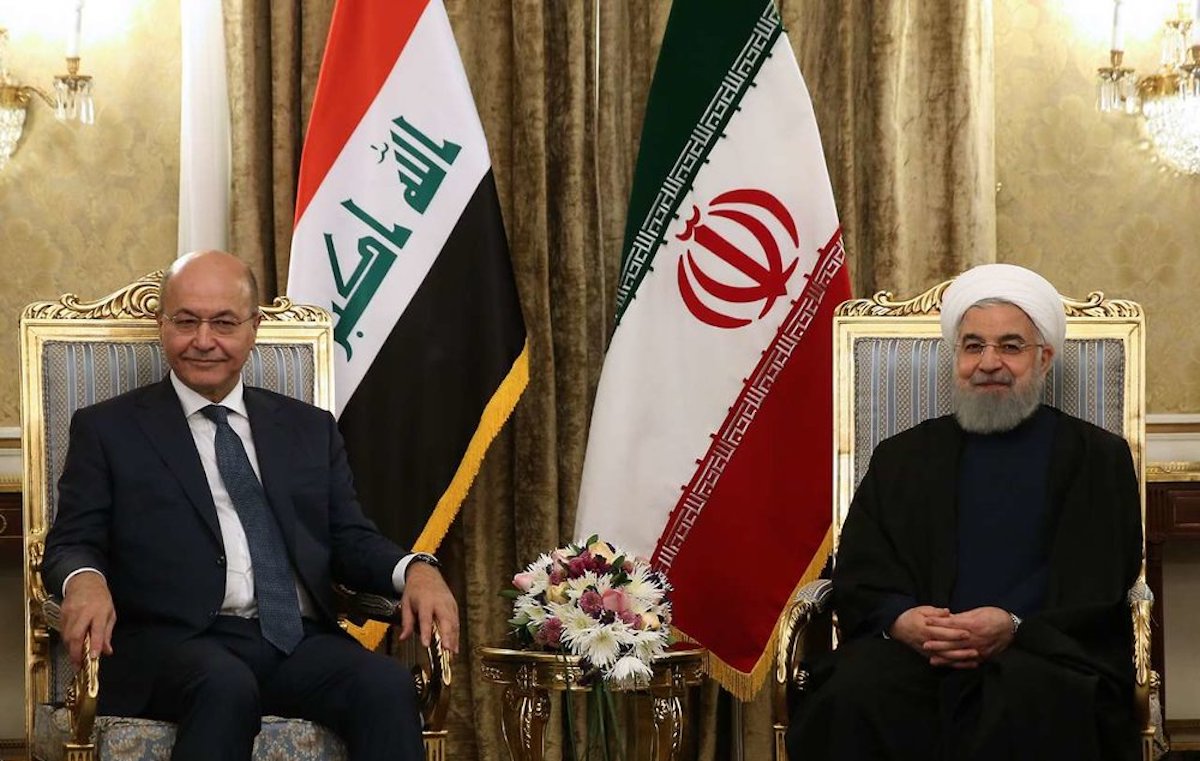
On Saturday 17th November the Iraqi President Barham Salih visited Tehran as part of his wider tour of the region, which included Kuwait, the United Arab Emirates and Saudi Arabia. During his visit to Iran, Salih met with Iranian President Hassan Rouhani. During the meeting, the two presidents stressed the historic, religious and geographic ties that the two countries share with each other. The future of trade between the two countries was also discussed extensively during the visit, with Rouhani remarking that Iran aims to increase trade and economic exchanges between the two countries from $12 billion to $20 billion every year. According to the Iranian Ambassador to Iraq, Iraj Masjedi, there are more than 79 Iranian companies making investments in Iraq worth approximately $8 billion. These investments include building power stations, refineries, guesthouses, stadiums, and other infrastructure.
The visit has come as the US puts more pressure on Iraq to sever economic ties with the Islamic Republic, having issued a 45-day deadline last week for Iraq to cease the importation of Iranian oil and energy supplies. However, Salih’s visit was essentially an opportunity for Baghdad to re-assure Tehran that economic relations will continue to thrive despite the imposition of sanctions on the country. Salih told reporters in a press conference that he has travelled to the neighbouring country with a “clear message” from Baghdad that Iraq “cares about relations with Iran”. This visit may be interpreted as an emphatic rejection of Washington’s demands that Iraq abide by the sanctions placed on Iran, and thus could strain relations with the US further.
President Salih’s visit to Iran was followed by a visit to Saudi Arabia on Sunday 18th November, where he was received by Saudi King Salman. During talks, the two sides also stressed the importance of maintaining close ties with one another and discussed ways of strengthening those tries further. With Baghdad in urgent need of foreign assistance and investments in order to aid the reconstruction efforts in the country, positive relations with Saudi Arabia, a potentially important donor for Iraq, will be key.
While the two sides did indicate their willingness to improve economic ties, there was little talk about the ways this would be done, beyond vague declarations, in stark contrast to the visit to Iran, where a number of initiatives were announced. There was also little mention of an energy supply deal that was announced by Saudi Arabia and Iraq in July this year. As part of the deal, Saudi Arabia have agreed to construct a 3,000 megawatt solar power station within a year of the signing of the accord and sell energy to Iraq for a quarter of the price currently offered by Iran.
The deal was announced as a result of the energy crises in southern Iraq earlier this year, which was triggered in part by Iran cutting back on its energy exports to meet its own domestic requirements. In light of the recent sanctions imposed on Iran, Iraq and Saudi Arabia will likely be placed under greater pressure from the US to sign the accord which would enable Iraq to further move away from its reliance on trade with Iran. However, the lack of tangible progress during Salih’s meeting with King Salman suggests that Baghdad still views Iran as its primary economic partner in the region despite current developments.
For more information on this subject and other developments in Iraq and Syria, subscribe to our daily intelligence reports and weekly digests.