

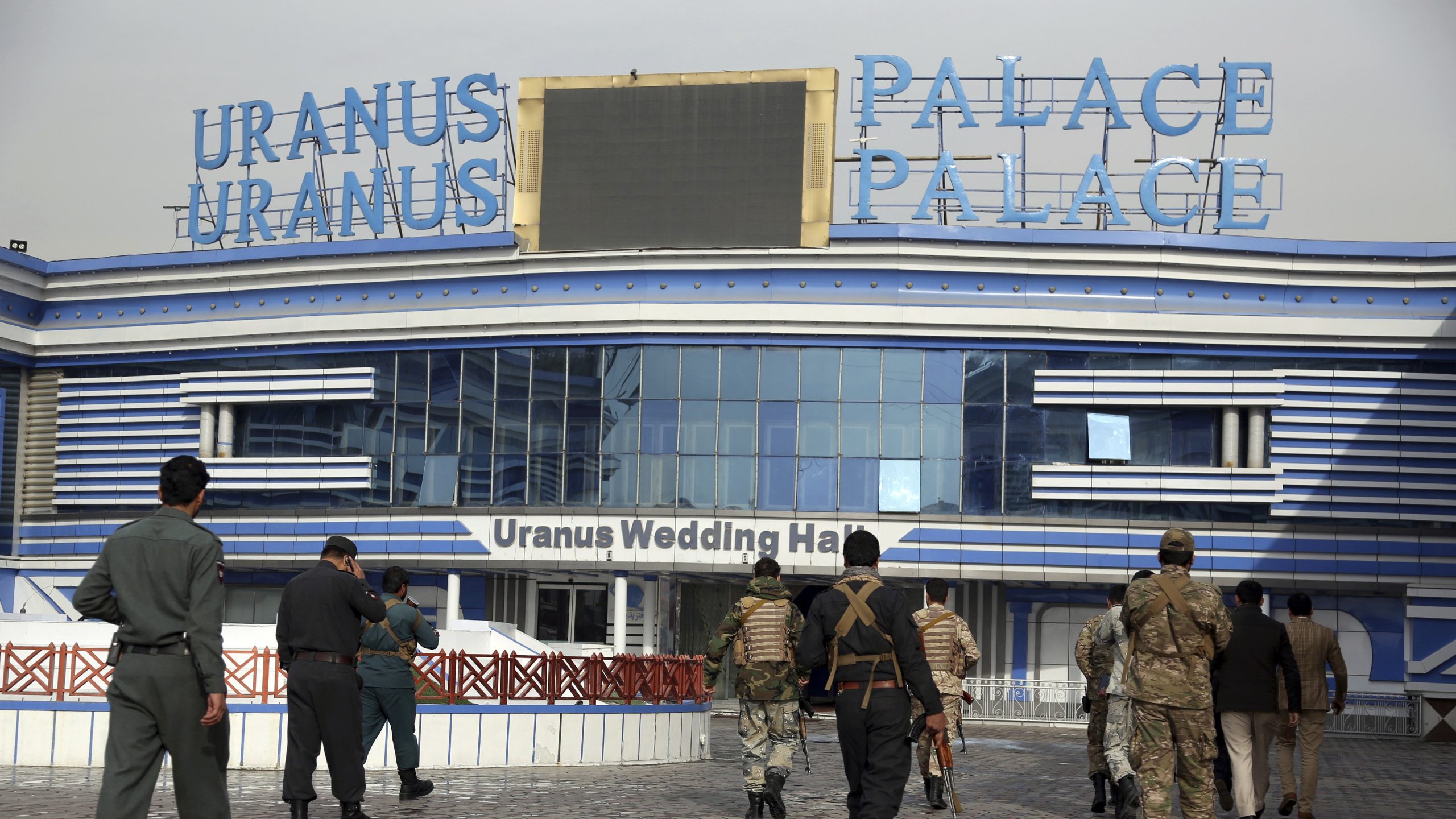
The death toll of the suicide bombing at the Uranus Wedding Hall in Kabul on Tuesday has exceed 50 people, according to the latest figures released by the Ministry of Public Health in Afghanistan. Although suicide bombings against civilians are a regular occurrence in Kabul and across Afghanistan, this attack took place during celebrations of Prophet Muhammad’s birthday, which is of particular significance for Afghanistan’s Sunni and Shia communities across the country.
Those participating in the celebrations included religious scholars, as well as students and members of the public. Although their identities have not been revealed, there is reason to believe that they were specifically targeted.
The attack has received condemnation from across the globe, including from the United Nations Special Mission to Afghanistan (UNAMA), the US, India, and Pakistan. Within Afghanistan, President Ashraf Ghani has declared 21st November a day of national mourning to pay respects to those killed in the bombing.
No group has so far taken responsibility for the attack. The Taliban, which commits the largest proportion of terrorist attacks in Afghanistan, has condemned the attack in a statement released by its spokesman, Zabihullah Mujahid. In addition, the Shia Ulema Council of Afghanistan issued a statement condemning the attack and pointing the blame at extremist groups who “consider the honouring of the dead, albeit the Prophet Muhammad, as ‘Shirk’”.
This has raised suspicions that Islamic State’s affiliate in Khorasan (ISK) is behind the attack. The ISK, as with other IS affiliates in Iraq and Syria, has been known to disapprove of celebrations of Prophet Muhammad’s birthday, claiming it to be an unlawful innovation within Islam. Celebrations of the Prophet’s birthday are known to be a controversial practice among certain Sunni groups. The group has also already committed a number of suicide bombings in Kabul that have specifically targeted non-Sunni groups, as well as foreign nationals and members of the Afghan National Army. The IS has, more broadly, perpetrated numerous acts of terrorism against religious minorities in other countries, such as Iraq, Syria, Egypt and Libya.
The ISK is concentrated predominately in the east of Afghanistan, in Nangarhar Province, bordering Pakistan. In recent times, the group’s main rival, the Taliban, has been engaging in multilateral negotiations in Russia with a number of states, the High Peace Council, and Zalmay Khalilzad, the United States’ special representative for Afghanistan. The group’s attacks in Kabul thus seek to bring them more attention in the public eye and sow further mistrust and discord in a country already plagued by chaos.