

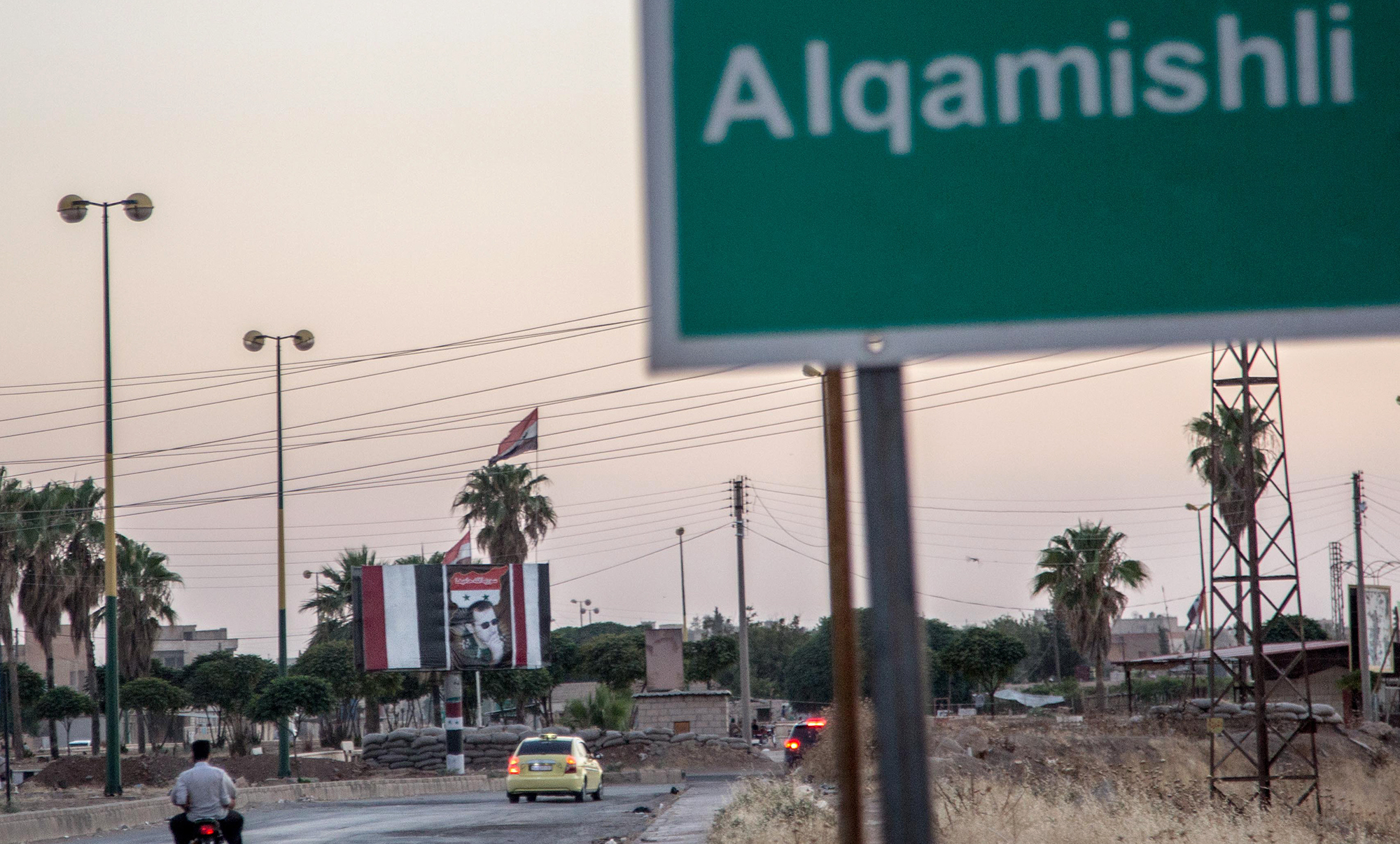
While Idlib remains the focus of attention in northern Syria, tensions have been brewing in the north-eastern Syrian city of Qamishli, in Hasakah Province, where demonstrations broke out in opposition to the forced closure of a number of private Christian schools on 28th August. An estimated 500 people gathered outside al-Amal School, a private Assyrian school, following its seizure by the Asayish, the general police force in the Democratic Federation of Syria (Rojava) and Sutoro, the complementary Assyrian police unit that mainly governs Assyrian-populated areas in the Jazira canton.
The Syrian Democratic Council (SDC)-affiliated Jazira Board of Education in the Jazira canton had released a statement in June 2017 demanding the closure of all private schools, irrespective of ethnic or religious denomination, as the political authorities began to implement reforms to standardise the education system in northern Syria.
With the school year approaching, a clash of interests between the ruling political authorities in northern Syria and certain Christian schools and churches in Qamishli came to the fore. As many Christian schools in Qamishli are private and linked to their respective churches, the matter of closure was of significant concern for the Assyrian and Armenian population in the region.
Those who came out to protest say they view the closures as an affront to the democratic values propagated by the political authorities in northern Syria. The sensitivity of this issue is also linked to deep-seated concerns among Christian and non-Kurdish communities that the political authorities are implementing a programme of Kurdification and so these communities consider such policies a threat to their identity and standing in Syrian society.
The SDC has encountered difficulties on a number of occasions in its attempts to simultaneously both honour the democratic will of all communities in northern Syria and unify the region against external and internal geopolitical threats.
Certain elements of those who sympathise with the political project in northern Syria consider the protestors to be stooges of the Damascus-based Syrian Government. This perception is not without a grain a truth since Christian communities in the north of Syria have been divided according to affiliation either to the Rojava political authorities or to the Damascus-based Government. Certain Christian communities and organisations are unwilling to let go of some of the privileges they enjoyed in pre-war Syria.
Qamishli is a particularly sensitive location for the northern Syrian political authorities in this regard because the Damascus-based Government continues to hold a presence in the city, where some of the Christian private schools are located.