

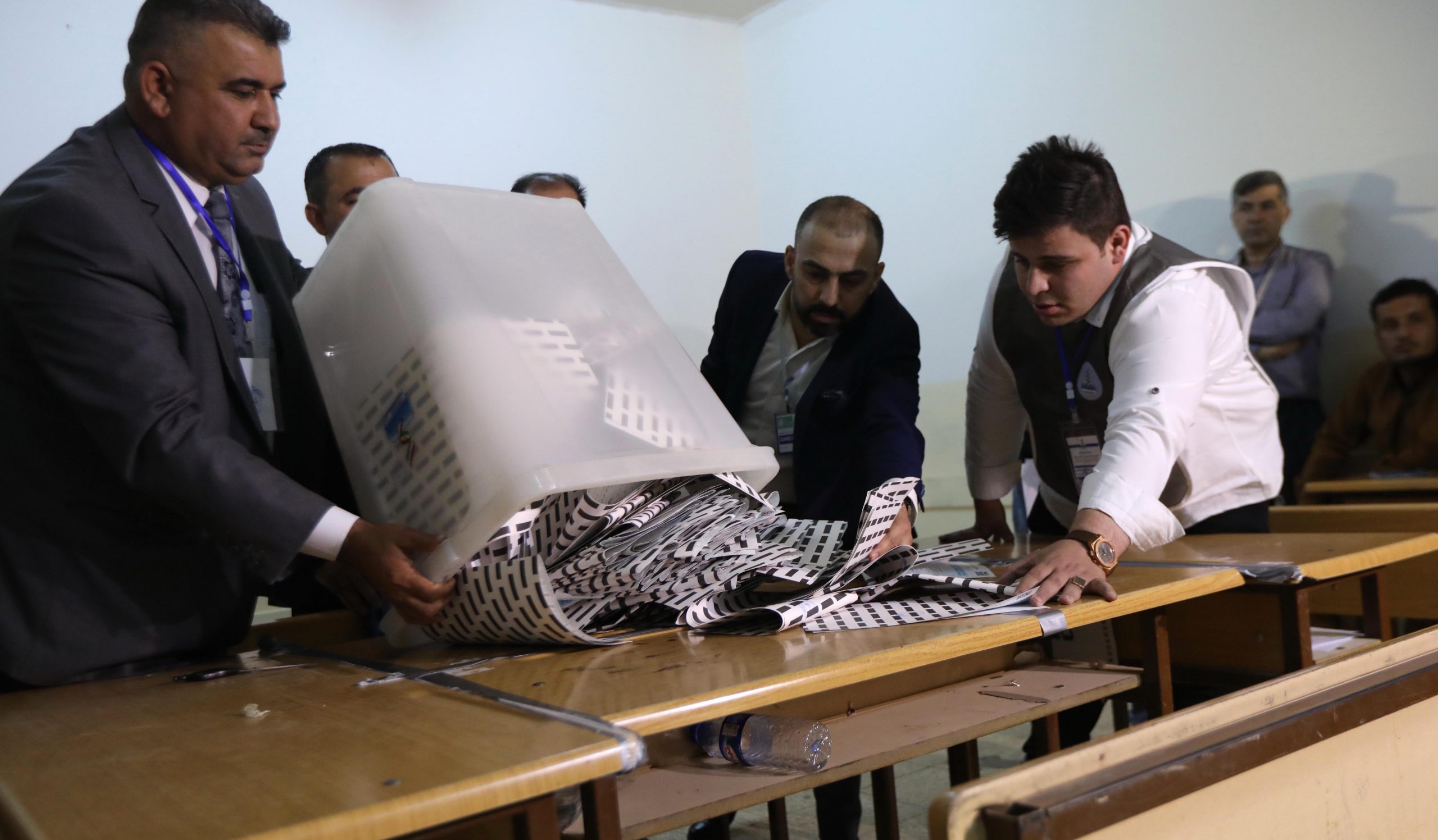
On Sunday 21st October, the Kurdish Independent High Electoral and Referendum Commission (IHERC) officially released the results of the Kurdish parliamentary election. The Kurdistan Democratic Party (KDP) obtained 688,070 votes, giving it a significant lead over its rivals, securing 45 seats in the 111-seat parliament, which is just 11 seats shy of an overall majority. The Patriotic Union of Kurdistan (PUK) came in second place, with 319,219 votes, securing 21 seats. This marks an improvement on its 2013 result of 18 seats. Meanwhile, the Gorran Movement suffered from a poor electoral showing, coming in third place with 186,903 votes, securing just 12 seats, down from 24 in the last parliament. The New Generation Movement got 127,115 votes, securing eight seats, and the Kurdistan Islamic Group (KIG) seven seats.
In response to the confirmation of the election results, Qubad Talabani, the deputy prime minister of the Kurdistan Regional Government (KRG) who headed the PUK list in the recent elections, has called for unity in the Kurdistan Region and has called on other parties to come together to face the challenges of the new parliament. Talabani’s statement has come amidst reports that tensions between the two parties have escalated over the previous month, following the KDP’s decision to break from the long-standing consensus that the Iraqi Presidential nominee remains reserved for members of the PUK. Moreover, the KDP’s resounding election win has granted their largest ever portion of seats, meaning that the KDP will potentially be able to form the KRG without having to enter into a coalition with the PUK, if they enter into coalition with other smaller parties. Freezing the PUK out of the regional government could escalate tensions significantly between the two parties, thus further destabilising the region.
However, despite the increase in tensions between the two parties, Bafel Talabani, the son of PUK founder, Jalal Talabani, has vehemently rejected suggestions that a civil war between the PUK and the KDP is a possibility. He reiterated that the two parties are always willing to cooperate and come together to achieve a political solution to any issue in the Kurdistan Regional Government (KRG).
Meanwhile, Opposition parties in the region have rejected the results of the Kurdish Parliamentary elections, stating that voter fraud complaints have not been sufficiently resolved by the IHERC. The Gorran Movement, in addition to the Kurdistan Islamic Union (KIU) and the New Generation Movement, have announced that they are yet to decide whether they will accept any positions in the next KRG cabinet in the wake of widespread voter fraud allegations. The fact that so many parties have rejected the results may call into question the validity and legitimacy of the elections, especially if reports continue to circulate about potential fraud and electoral violations taking place during the vote. Furthermore, the Opposition parties’ reluctance to enter into coalition with the KDP means that it could be forced to form a minority government if the KDP and the PUK do not resolve their political differences in the coming weeks.
Click here to subscribe to our mailing list.