

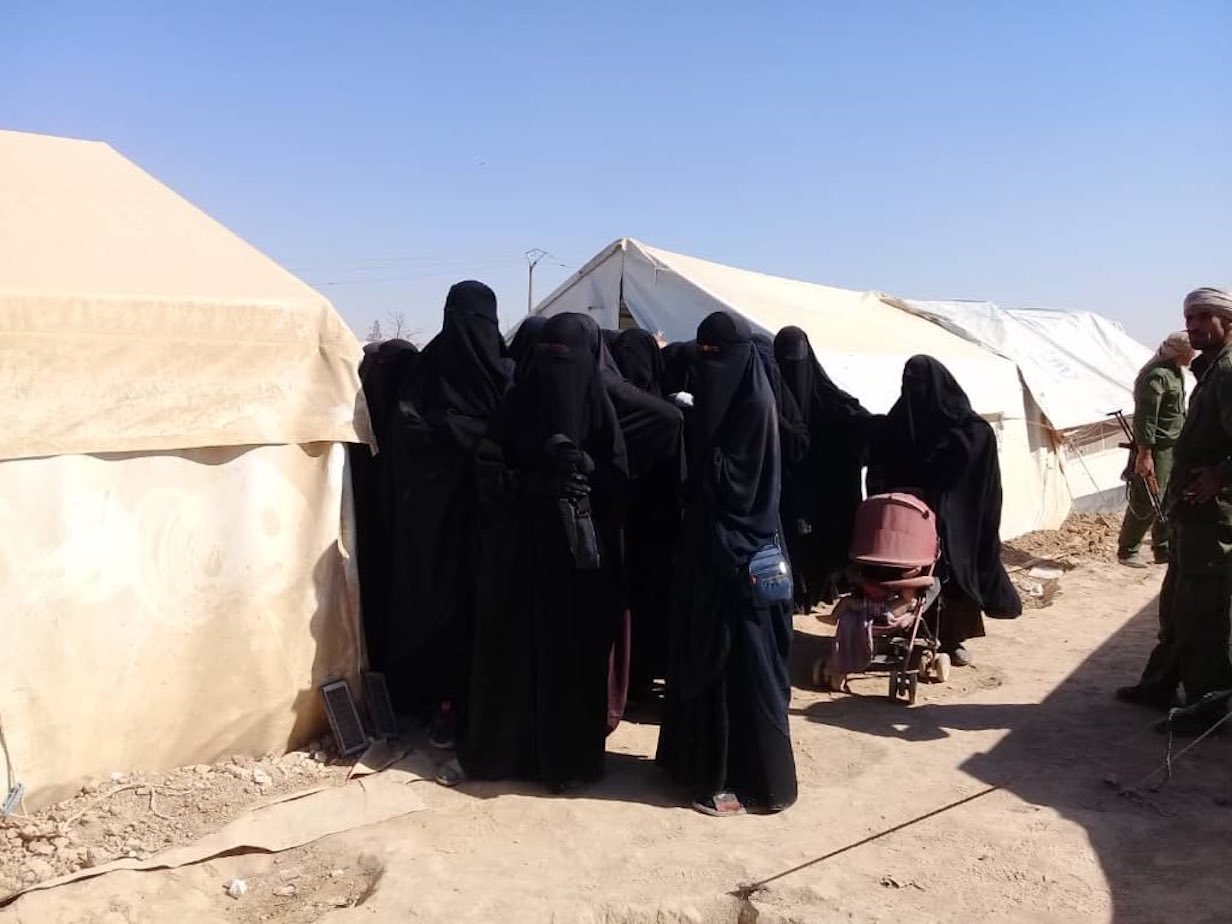
Since the defeat of ISIS at the hands of the Syrian Democratic Forces (SDF) in eastern Syria, international attention – be it government or media – has been shifting away towards more conventional geopolitical rivalries. However, the territorial defeat of ISIS has not spelled the end of the group. Instead, hidden from the magnifying glass, remnants of the terrorist group have continued to operate, by forming sleeper cells to conduct insurgency attacks on security forces or by ensuring that the core group of supporters remains loyal to the group. The latter is currently manifesting itself violently in al-Hawl (or al-Hol) Refugee Camp in the north-east of Syria.
Over the course of the recent weeks, the camp, which houses some 71,000 people, most of whom are wives and children of ISIS militants including foreigners, have witnessed a series of security incidents. These security incidents, oftentimes committed by the so-called “ISIS wives”, attest to the persistence of the group’s ideology and appeal as well as highlighting the dangers of holding such individuals as prisoners in a camp not designed or equipped to handle them.
The women were reported to have set up secret “sharia courts” in the camp’s annex assigned to “migrants” – foreign supporters of ISIS – and holding trials against other women deemed to have diverged away from the group’s ideology. On September 30th, the Internal Security Forces (ISF) of the SDF found eight ISIS women flogging another woman as part of these trials. An Iraqi man and two Uyghur women were also reportedly found injured by the ISIS women, while the body of an Indonesian woman was found in a sewage area. Subsequently, the ISF raided the tents where these trials were taking place, leading to a shoot-out with the ISIS women. These women then instigated a riot, which resulted in violent clashes with the ISF, leading to the death of three of the ISIS women, the injury of seven others, and the arrest of 50 individuals.
The establishment of these secret “sharia courts” calls to mind the group of female military police (hisba) active during the height of ISIS called al-Khansaa Brigade. Some of the aforementioned ISIS women are likely remnants of al-Khansaa Brigade and are enforcing its dictates on women in al-Hawl. They have perpetrated crimes on other occasions throughout the year, including the killing of another Indonesian woman in July and reports of harsh punishments meted out to girls and women who were seen outside without niqabs.
The camp is currently being managed by the Autonomous Administration for North and East Syria (AA), with members of the local police (Asayish) providing security. International organisations such as UNICEF, UNHCR, the Red Cross and the WHO are also providing support for the upkeep of the camp. Nevertheless, the principal question of what to do with ISIS-affiliated individuals in the camp is still left unanswered.
The spokesperson for the SDF, Mustafa Bali, has repeatedly called on governments around the world to assist in the resolution of this question. There are two options that face the international community with regards to ISIS-affiliated individuals in Syria: to support the setting up of trials within the AA itself, preferably through the involvement of the International Criminal Court (ICC) – or a similar, bespoke international body – or for governments to repatriate their citizens.
The first option would require comprehensive financial and legal support to the AA to set up and carry out the trials. One issue with this option is that the AA is not an internationally recognised government and so the legality of these trials would be up to dispute. Nevertheless, legal experts at July’s International Forum on ISIS agreed that there is a legal basis for international tribunals in the AA. Furthermore, the ICC option is also subject to a significant legal obstacle: Syria has not ratified the Rome statute that binds a state to the ICC. It is highly unlikely the Syrian President, Bashar al-Assad, would ratify the statue for this purpose as he himself would then be subject to the dictates of the ICC. The transfer of ISIS individuals to Iraq has also been a mooted idea, although the existence of capital punishment in Iraq has worried European countries and the trial of non-Iraqis there would also bring about its own legal problems.
The second option of repatriation, which would ease the number of people in the camp, would render the situation more manageable. Although a number of individuals have been repatriated on the initiative of the Foreign Relations Service of the AA in cooperation with interested governments, most requests for repatriation have been met by silence on the part of governments that see too much political risk in the endeavour on account of that many of these individuals’ links to actual ISIS crimes – which could lead to higher sentences than they would receive for their “affiliation” with ISIS – being difficult to prove.
The threat represented by these ISIS women in al-Hawl possesses both military and ideological elements. Many of the ISIS women are known to have military training and have been reported to smuggle weapons and IEDs into al-Hawl in an attempt to build up their military capacity and train their children. ISIS women in al-Hawl have been known to attack camp guards and make attempts to smuggle themselves out of the camp on various occasions. In an audio recording released in mid-September, ISIS leader Abu Bakr al-Baghdadi called on sleeper cells of the group to free ISIS detainees stranded in jails and camps, the most prominent of which is al-Hawl. There are suspicions that a plan to raid the camp and take out ISIS members are being prepared. This would mirror similar prison raids that were sparked in 2013 at Taji and Abu Ghraib in Iraq, which helped to free approximately 800 militants. Further raids took place in 2014 that helped to concretise ISIS as a group and establish its brand.
In terms of the ideological threat, the children of these ISIS women are vulnerable to indoctrination and have the potential to become radicalised individuals set on the path towards terrorism in the future. There is currently no rehabilitation programme at al-Hawl, in contrast to the Houri Centre for the Protection and Education of Children in Tal Marouf, located north of al-Hawl. The Houri Centre has brought in minors who have been affected by ISIS’ ideology and it is acting as both a detention and rehabilitation centre. Nothing of the kind exists in al-Hawl, and resources to manage the camp are already stretched for the AA.
The SDF hopes that the growing urgency of the situation will renew international attention to the matter of foreign supporters of ISIS being held in al-Hawl and increase the rates of repatriations taking place. Although delegations from European countries have been intermittently visiting the AA and the International Coalition is still present in the region, the focus of such visits have been on the implementation of the safe-zone with Turkey. The two issues of transitional justice and rehabilitation of ISIS-affiliated individuals must be the primary foci of international attention on al-Hawl if there is an interest in containing the threat posed by ISIS supporters, the stoppage of the radicalisation of children in such an environment and the prevention of a next generation of militants emerging.
For more information on this subject and other developments in Syria, subscribe to our daily intelligence reports and weekly digests.
Image: Twitter/Mustafa Bali