

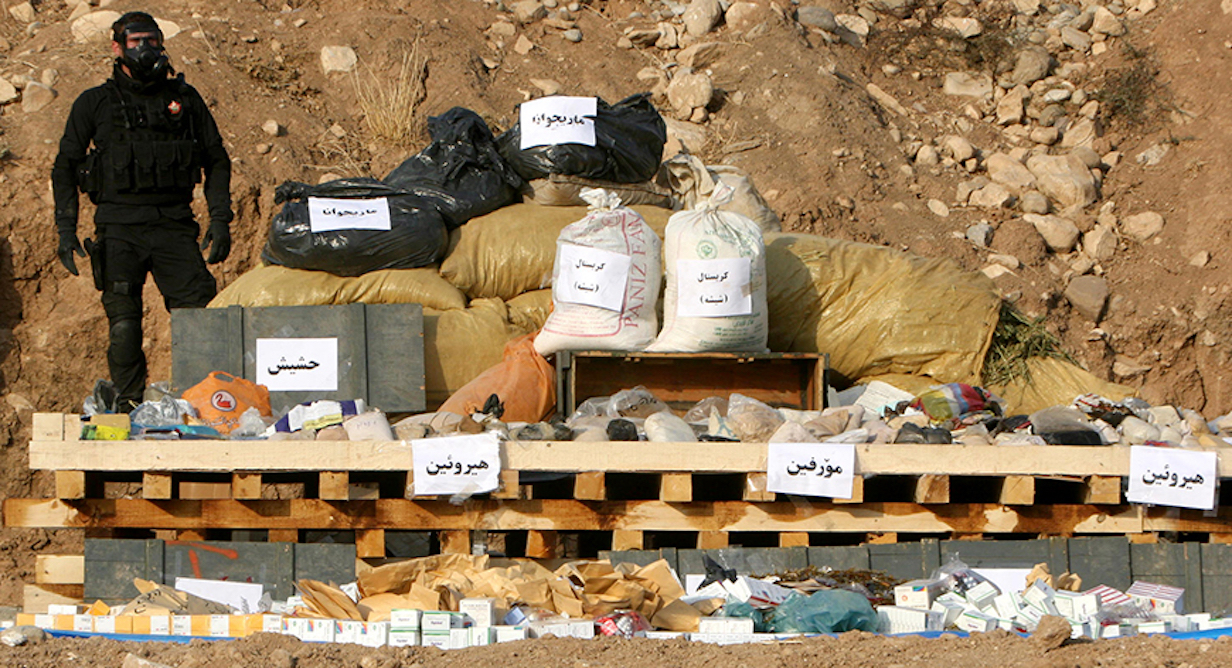
Since the beginning of this year, the Iraqi Government has found itself struggling to manage an escalating recreational drug use epidemic, leading to increased levels of addiction and cross-border smuggling, as well as the domestic production of drugs. According to experts, arrests for the possession or supply of drugs have seen an increase of more than 200% so far this year, representing an average of 50 to 60 people arrested per week. Over the past week alone 56 arrests have been reported by a number of police and border force units across the country.
As a result of the arrests, which have come as the Iraqi Government increases its efforts to combat the rising drug epidemic, a reported 600 grams of crystal methamphetamine, 595 grams of heroin/opium and over 214,100 captagon pills were seized in the combined anti-narcotics operations. In addition to the numerous drug seizures, an anti-narcotics operation by the Popular Mobilisation Units (PMU) earlier this month led to the arrest of drug kingpin, Hamza al-Shammari, who is accused of heading vast gambling, prostitution and smuggling rings across Iraq.
The escalating drug epidemic is particularly acute in the southern province of Basra, which shares a 94-kilometre long border with Iran. During Iraq’s four-year battle against ISIS in the northern and western regions of the country, many of Basra’s local security and border forces were redeployed to assist in the fight against the militant group. As a result, cross-border smuggling from Iran increased unabated and largely unnoticed, with much of the illicit drugs trade ending up in the city of Basra. Although the seizure of drugs on the border has increased as a result of the renewed anti-narcotics operation, drugs of Iranian-origin still make up an estimated 80% of all drugs in Basra Province.
The increased drug trade in Basra has contributed to a significant decline in the social conditions of the city, which has experienced high levels of unemployment and sustained energy shortages, which contributed to widespread, and often violent, protests over the past two summers. Moreover, drug use has proliferated amongst former members of the ISF that took part in the battle against ISIS between 2013 and 2017, and in the subsequent anti-insurgency phase in following years. Accordingly, the use of recreational drugs amongst the poor, unemployed, former fighters and those with psychological problems suggests that Iraq will struggle to put an end to this epidemic through the policing and justice system alone.
Indeed, the police in Basra have responded to the lack of prison capacity by forming its own rehabilitation centre for individuals that are addicted drugs and are currently being processed by the justice system. According to the director of the centre, drug addicts and drug dealers will now be separated as each must be dealt with accordingly. Although the centre is a positive step forward towards treating people afflicted by addiction, it is, nevertheless, a one-of-its-kind in the city and is operated by the police, as opposed to medical professionals and social services. Moreover, many of the 40 inmates of the rehabilitation centre have either completed, or will shortly be sentenced, to a period in prison. For a drug epidemic that has been caused, in part, by poverty and potentially post-traumatic stress disorder (PTSD), there has so far been little in the way of longer-term treatment offered to former and current addicts.
For Iraq to counter its drug epidemic, a greater and more centralised system of social support, training programmes and a health-based approach to drug addiction is required. Basra’s rehabilitation centre is a start, but to expand this approach the Iraqi Government will need to increase investment beyond its anti-narcotics security operation. This, in turn, could offer greater support to those suffering from the effects of poverty and PTSD and prevent individuals from turning to recreational drugs in the first instance.
For more information on this subject and other developments in Iraq, subscribe to our daily intelligence reports and weekly digests.