

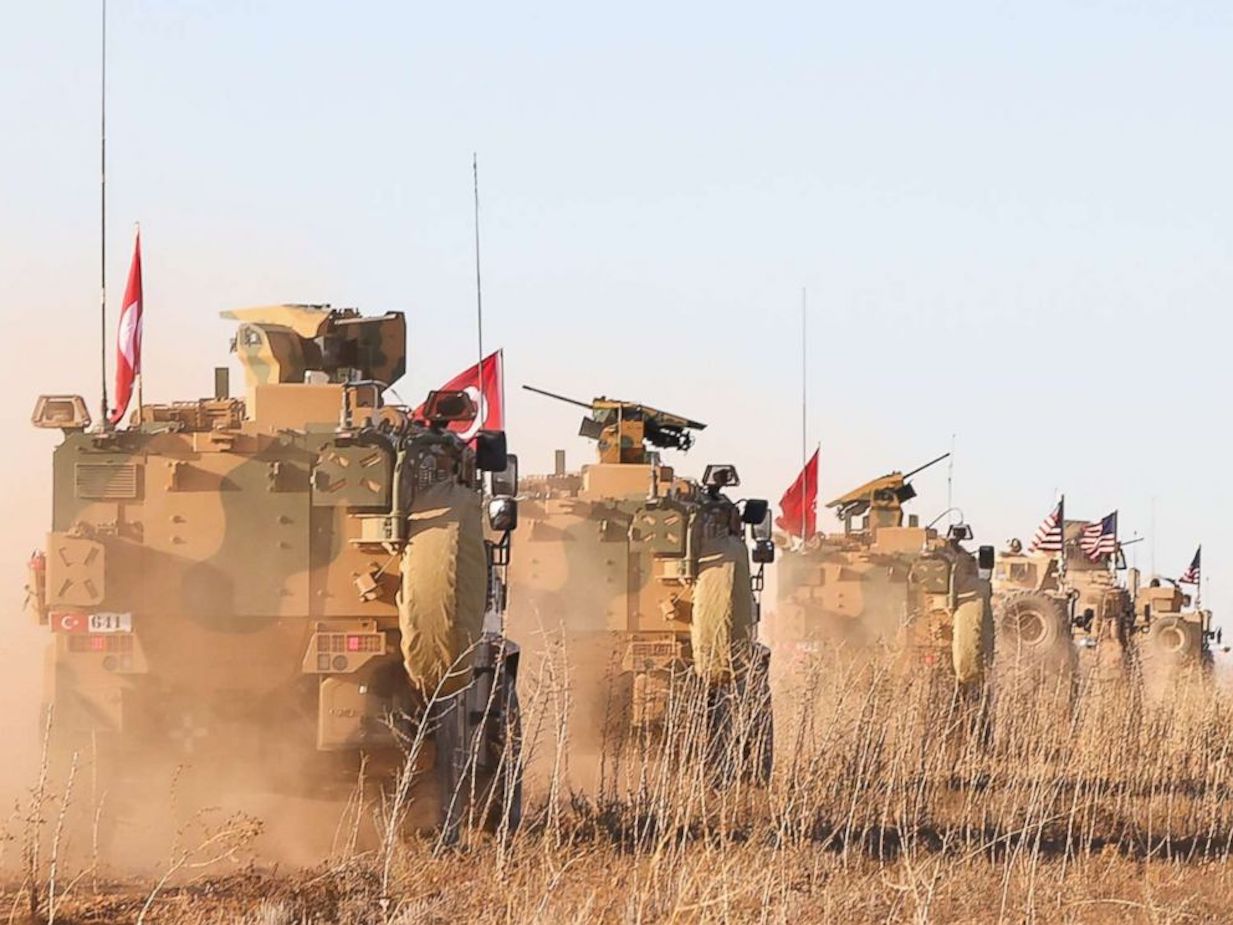
Last Wednesday, Turkey began a much-anticipated military operation in north-eastern Syria aimed at removing the predominantly Kurdish-led Syrian Democratic Forces (SDF) from the border area with Turkey and establish a “safe zone” 30 kilometres wide to re-locate up to two million Syrian refugees currently residing in Turkey. The move came just days after the United States’ President Donald Trump ordered the full withdrawal of troops form the region, who had been stationed there to militarily support the SDF in its defeat of ISIS.
The main source of the dispute is the presence of the People’s Protection Units (YPG) in the SDF. The group is the leading faction of the SDF. Although the International Coalition has viewed the YPG and the wider SDF as an instrumental partner against ISIS, Turkey has viewed the group with suspicion, accusing it of being the Syrian branch of the Kurdistan Worker’s Party (PKK) that has conducted an insurgency in Turkey since the 1980s.
However, despite growing international condemnation of Turkey’s actions, including from the United Nations, the European Union and President Trump himself, who vowed to “destroy and obliterate” the Turkish economy in the event of heavy-handedness by the Turkish Armed Forces (TSK), no major regional or global power has so far shown active opposition to the Turkish operations. This was notably highlighted by NATO’s Secretary-General, Jens Stolenberg, who hesitated to condemn the offensive at a plenary session of the NATO Parliamentary Assembly on Monday night.
The SDF had long-warned that it would be unable to both fend off a Turkish incursion and guard ISIS prisons at the same time. This projection took only days to materialise, with around 800 people affiliated with ISIS since escaping from the Ain Issa prison camp. Moreover, the Kurdish Red Crescent reported on Tuesday night that the offensive has so far killed 70 civilians and 130 SDF fighters, with the number of Turkish soldiers and the Syrian National Army (SNA) fighters being killed standing at 120. The UN estimates that at least 160,000 people have so far fled their homes in the region.
Although isolated on the international stage, the TSK are not without allies on the ground, most notably the SNA which forms the bulk of the Turkish-led forces on the ground. Meanwhile, in a significant shift in the course of the Syrian conflict, the SDF has reached a landmark agreement with the Syrian Government which has seen the Syrian Arab Army (SAA) makes its way to the Autonomous Administration of North and East Syria (AA) to join the fight against the invading forces, in a part of Syria it has not set foot in for almost six years. So far, the SAA has taken control of Manbij and plans to extend its control from there to Tabqa, as well as northwards from Tabqa towards Ain Issa and Tel Abyad, and from Hasakah to Qamishli and Al Malikiyah via Ras al Ayn, according to an agreement reached between the SAA and the SDF.
The fallout of recent developments will no doubt engender seismic political and economic shifts regionally and internationally. Although Turkish President, Recep Tayyip Erdoğan, rejected a US call for an immediate ceasefire in northern Syria on Wednesday morning, domestic economic woes mean that Turkey can ill-afford to prolong the impact of sanctions on its defence, energy and interior ministries imposed by the US on Monday. Russia, which has vowed to prevent clashes between Turkish and Syrian government forces, could ultimately play a pivotal role as closer. Russia has already sought to pull Turkey from NATO’s orbit and tensions with Washington could further facilitate that.
As for the future of the AA, it would appear that the pragmatic alliance with Damascus has, for now, trumped over long-term socio-political allies. As highlighted by the SDF’s Commander-In-Chief, Mazloum Abdi, compromise was a better option compared to “genocide”. However, the ruling Ba’ath Party, guided with its own ideology, is unlikely to let any semblance of autonomy exist in Syria in the long term. It therefore remains to be seen how long this alliance of convenience can last.
For more information on this subject and other developments in Syria, subscribe to our daily intelligence reports and weekly digests.