

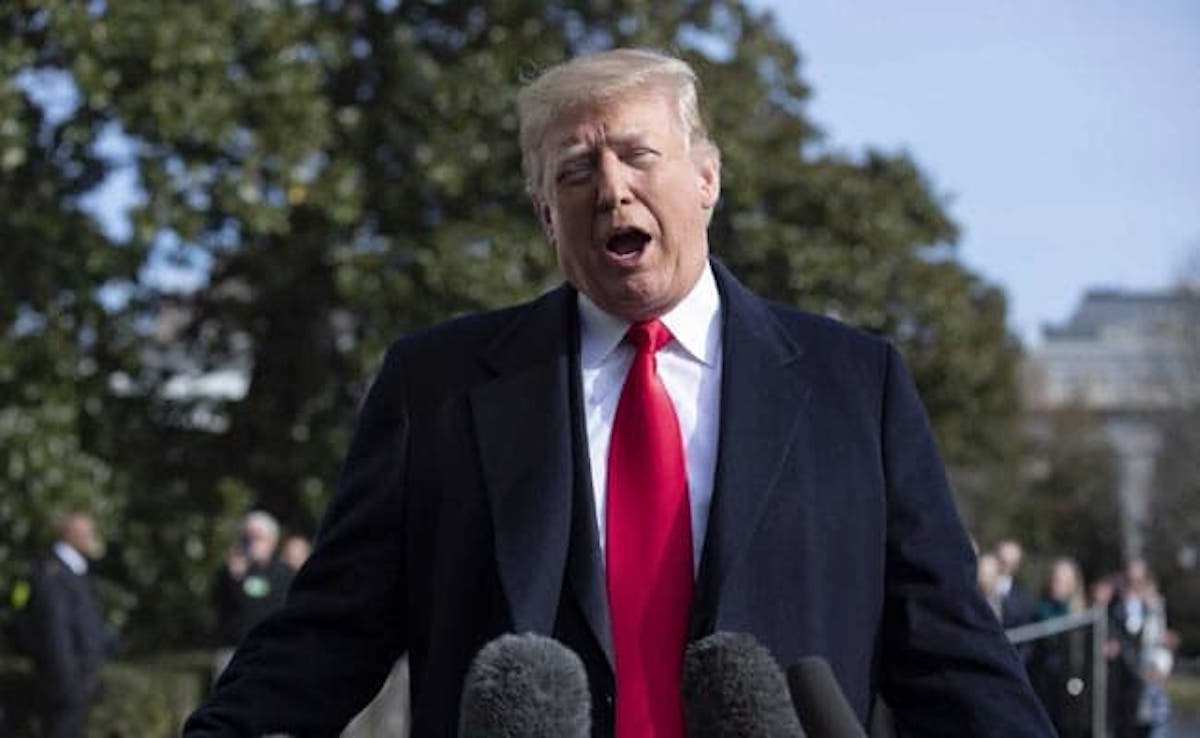
On Thursday 20th December United States President Donald Trump announced that he ordered the withdrawal of US troops in Syria within 60 to 100 days. Despite stating in a Tweet on Wednesday 19th that the withdrawal of US forces is as a result of the defeat of ISIS in Syria’s north-east, Trump nevertheless contradicted himself the following day by claiming that Russia and Iran are not happy that the US is leaving on the grounds that they will now have to fight ISIS themselves. Russia, for its part, responded positively to the announcement. On Thursday 20th, Russian Foreign Ministry Spokesperson, Maria Zakharova, praised the decision, noting that it raises prospects for peace in Syria and, especially, de-escalation in the Tanf region.
Trump’s announcement has coincided with a statement released at the beginning of the week by Turkish President Recep Tayyip Erdoğan declaring that the Turkish Armed Forces (TSK) had finished preparations for an operation in north-eastern Syria. Erdoğan further announced that he had received a positive response from Trump regarding the operation and that special care had been taken to ensure that US forces in the region will not be harmed.
The same assurance was not, however, extended to the remaining International Coalition forces in the region, which claimed over the weekend of the 15th and 16th that any Turkish-backed attack by the Syrian National Army (SNA) and the Syrian National Coalition (SNC) would lead to a direct confrontation that would “fully destroy the relations” between the NATO allies. The confirmation by France and the United Kingdom that its respective forces would remain in the region despite the withdrawal of the US means that the threat of confrontation between the two sides remains tangible.
In an effort to defuse the situation in north-eastern Syria, over the weekend of the 15th and 16th December, the US mediated over a meeting between the Kurdish People’s Protection Units (YPG), a major component of the Syrian Democratic Forces (SDF), and the Rojava Peshmerga, the armed wing of the Kurdish National Coalition (ENKS). The main topic of discussion was the return of the Rojava Peshmerga, which has been in de-facto exile in Iraq, back into Syria. He added the US officials were adamant about the return of the Rojava Peshmerga and that the YPG should not be opposed to this.
Although the ENKS have maintained relatively friendly relations with Ankara, the announcement on Tuesday 18th by the US Special Representative for Syria Engagement, James Jeffrey, of the deployment of around 100 Kurdish Peshmerga forces in the Turkish-SDF border region was met with objections from Turkey, suggesting that the move was not approved by Turkey and was, in fact, contrary to Turkish wishes.
Jeffery also noted that in regard to the future of the SDF, the US historically does not have permanent relations with sub-state entities and that the solution is to reform the Syrian Government. In response to Jeffrey’s remarks and Trump’s withdrawal announcement, Mustafa Bali, the SDF Press Official noted that the withdrawal is against the US’ agreement with the SDF and implied that his organisation would now be working with the Syrian Government instead. Although Damascus has no financial or military means of occupying the entirety of the SDF-held areas, it will likely focus on securing its borders and oil wells whilst slowly increasing its political influence over the SDF.
Part of that may be the entangling of the SDF into the militia structures of the Syrian state, thus gradually eroding the autonomy of the organisation and the region. Regardless of the outcome, the US’ decision to withdraw has meant that the SDF have been forced to negotiate from an extremely weak position. Ultimately, the SDF’s shift of loyalty from the US-led International Coalition to the Syrian Government would enable Syrian President Bashar al-Assad to form an alliance to further achieve his goal of recapturing Syria in its entirety, at the expense of any future input from the US.
Image: NDTV