

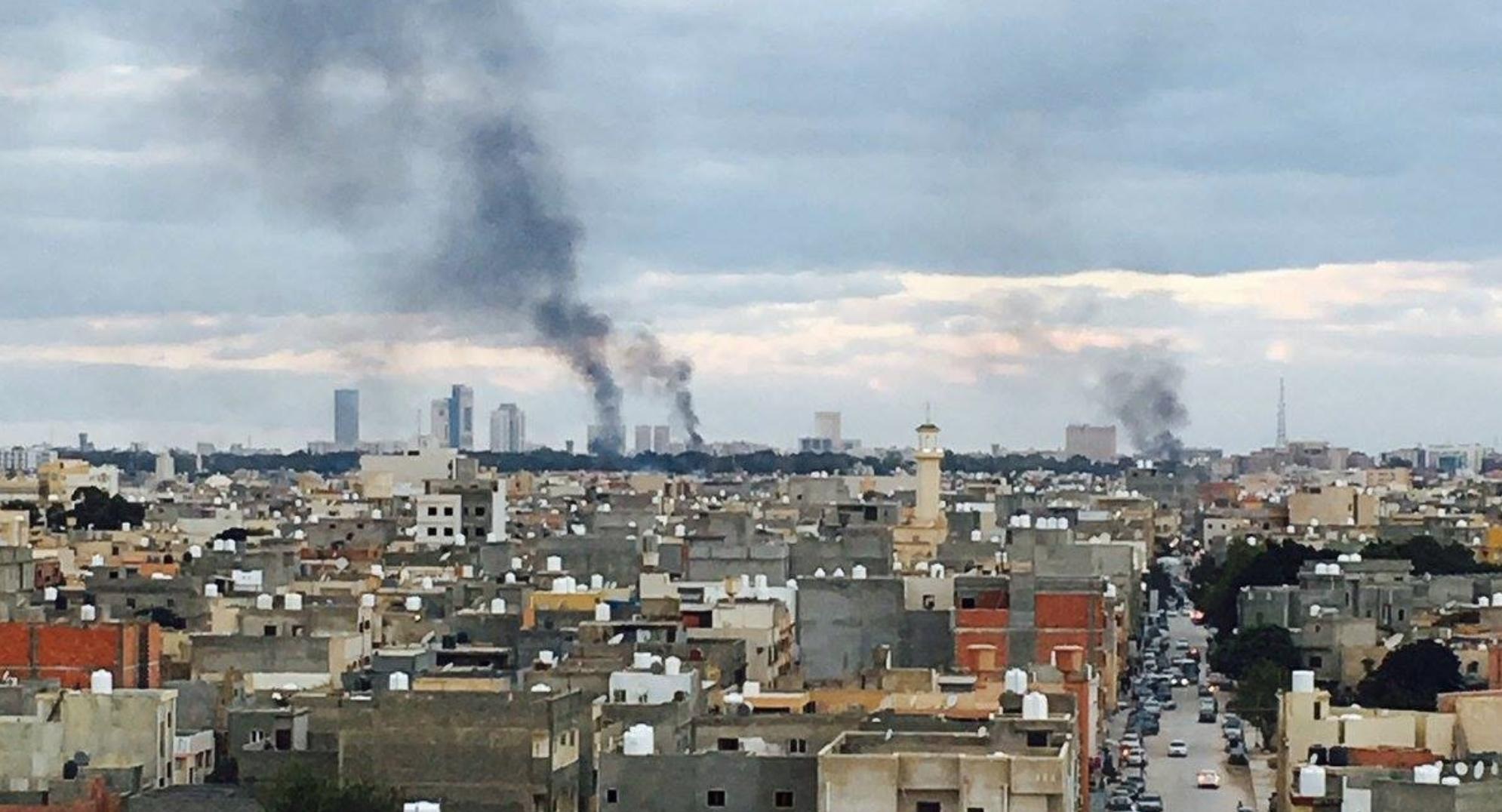
In Libya’s capital city, Tripoli, renewed clashes broke out on Tuesday between rival militia groups, violating a UN-imposed ceasefire that had been in place since 5th September. Tuesday’s fighting erupted once again on the capital’s southern Airport Road between Liwa al-Sumoud and Central Security Department Forces, resulting in the death of one person and the injuring of at least five others.
The clashes, which initially started at the end of August between the Tarhouna-based 7th Brigade and other Tripoli-based militias, have highlighted the fragile nature of the ceasefire and the delicate balance of power between militia groups in the capital.
On Tuesday 18th , the Head of the Government of National Accord (GNA) Presidential Council, Fayez al-Serraj, met with members of the Security Measures Committee of Greater Tripoli, to review the security situation in the city. Following the meeting, al-Serraj stressed on the need for the committee to oversee the ceasefire’s implementation and to secure the country by implementing the measures agreed upon with the UN Support Mission in Libya (UNSMIL).
Moreover, al-Serraj announced the formation of a new security force aimed at restoring the terms of the ceasefire throughout Tripoli. The new force, called the Joint Force for Conflict Resolution and Security Imposition, will be commanded by regular GNA commanders.
As a result of the clashes, which have focused mostly around the southern suburbs of the city, more than 60 people have been killed, in addition to the estimated 19,225 people who have been displaced to other districts of Tripoli. Moreover, power supplies have been cut to many of the households in western and southern Libya, including in Tripoli, after a major power distributor was hit during the fighting in the southern suburbs. The fighting has also led to the closure of Tripoli International Airport for the second time in two weeks, with air traffic diverted to the city of Misrata 200 kilometres to the east.
In May, a summit held between the UN-backed western-based Government of National Accord and the eastern-based House of Representatives resulted in the two rival governments pledging to hold elections before the end of the year. However, the powerful militias of western Libya rejected the move, stating that the agreement went against their own interests.
The influence that the individual militias continue to hold in Libya and the GNA’s inability to demobilise the forces, as well as the increased violence in Tripoli, has called into question whether there remains a realistic chance of nationwide elections before the end of this year.