

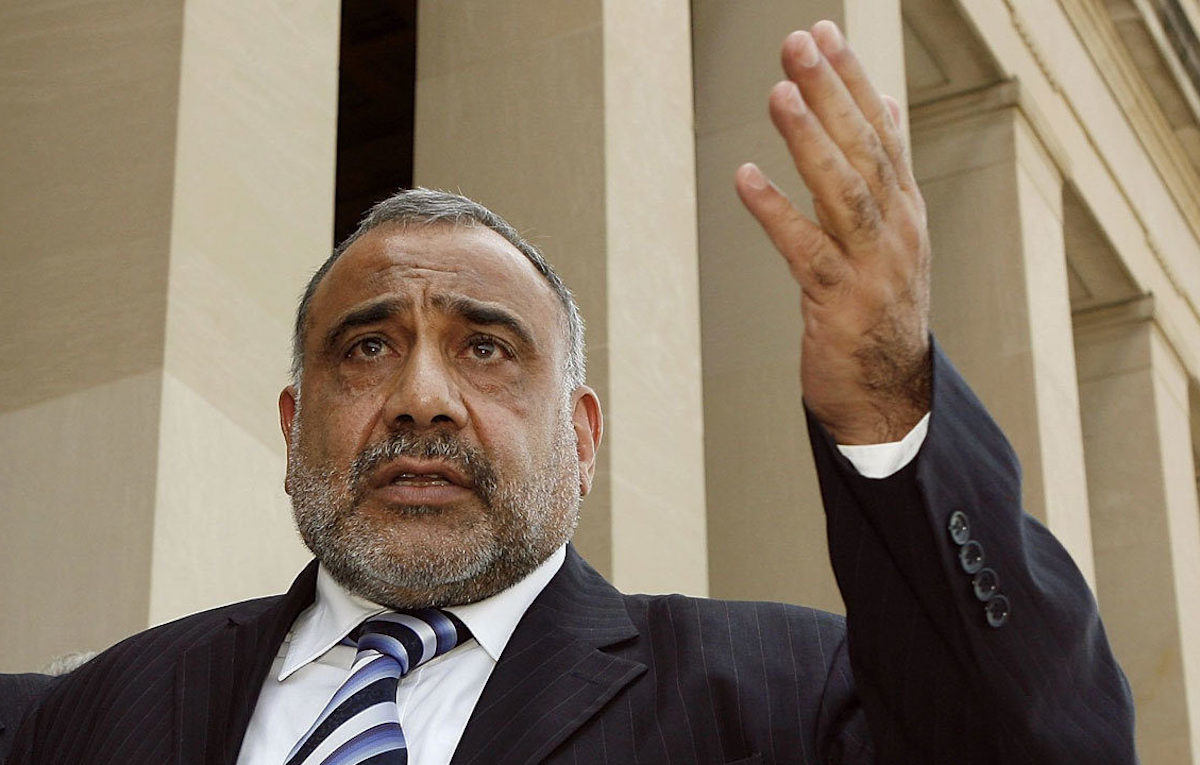
Last week, on Tuesday 2nd October, Iraqi lawmakers elected the Patriotic Union of Kurdistan nominee, Barham Salih, as the new President of Iraq in a second round of voting following the withdrawal of the Kurdistan Democratic Party’s (KDP) nominee, Fuad Hussein. Shortly after being elected as the new President of Iraq, Barham Salih called upon the former Oil and Finance Minister, Adil Abd al-Mahdi, to form the new government, effectively appointing him as the Prime Minister-designate. According to the Iraqi constitution, Mahdi has just 30 days to nominate a cabinet for parliamentary approval.
According to reports, Abd al-Mahdi had a few preconditions before agreeing to assume the role of Prime Minister. These included having full freedom to select ministers, being given freedom to run the new cabinet, limiting the number of nominees by parties to the cabinet to five and eliminating party and political interference. However, given the fact that Abd al-Mahdi assumed his role as Prime Minister-designate off the back of a consensus by the major parties, most notably the Construction Bloc and the Sa’iroun Alliance, he may find it difficult to shake off the pressure to include party nominees.
Following his nomination, Abd al-Mahdi met with a number of party leaders as well as the Speaker of the Iraqi parliament, Mohammed al-Halbousi, to discuss possible candidates for the Council of Ministers. Among the most prominent figures who Abd al-Mahdi met were Nouri al-Maliki, the leader of the State of Law coalition, Osama al-Nujaifi, the head of al-Qarrar Alliance, and Qais al-Khazali, the leader of Asa’ib ahl al-Haq. He also held meetings with the former Speaker of Parliament, Salim al-Jabouri, and a senior figure from Haider al-Abadi’s Nasr Coalition, Khalid al-Obeidi. With so many parties clamoring to be part of the new government, the pressure to compromise on his vision to create a fully independent government will likely be immense, especially given his reliance on their support.
Amidst this, the Sa’iroun Alliance’s leader, Muqtada al-Sadr, released a statement on Twitter last week announcing that the Sa’iroun will not nominate anyone from their party to any ministerial position. Sadr’s announcement came as an attempt by him to ensure that the next government is made up of independent technocrats, as opposed to partisan party politicians. Shortly after this statement, Abd al-Mahdi launched a website, inviting Iraqi men and women who meet the constitutionally-defined requirements to apply for the cabinet, thus opening the nomination process to the wider public, suggesting that he is willing to continue fighting for a government independent of the major political parties. As of Wednesday, 10th of October, 36,006 applications were submitted online.
The challenges facing the government are plenty. The country is still plagued by endemic corruption and a deeply entrenched patronage network. Like previous governments, these may form insurmountable obstacles to any policy platform that seeks to implement real reform in the country and resolve Iraq’s faltering public services and stalling economy, and create jobs for the country’s frustrated, young population.
However, Adil Abd al-Mahdi’s own independence, as well as the political support he has cultivated from Iraq’s diverse political landscape, could aid his chance of forming a government in his own vision that can cater to Iraq’s heterogenous population and help the country recover from years of turmoil and develop prosperously.
Click here to subscribe to our mailing list.