

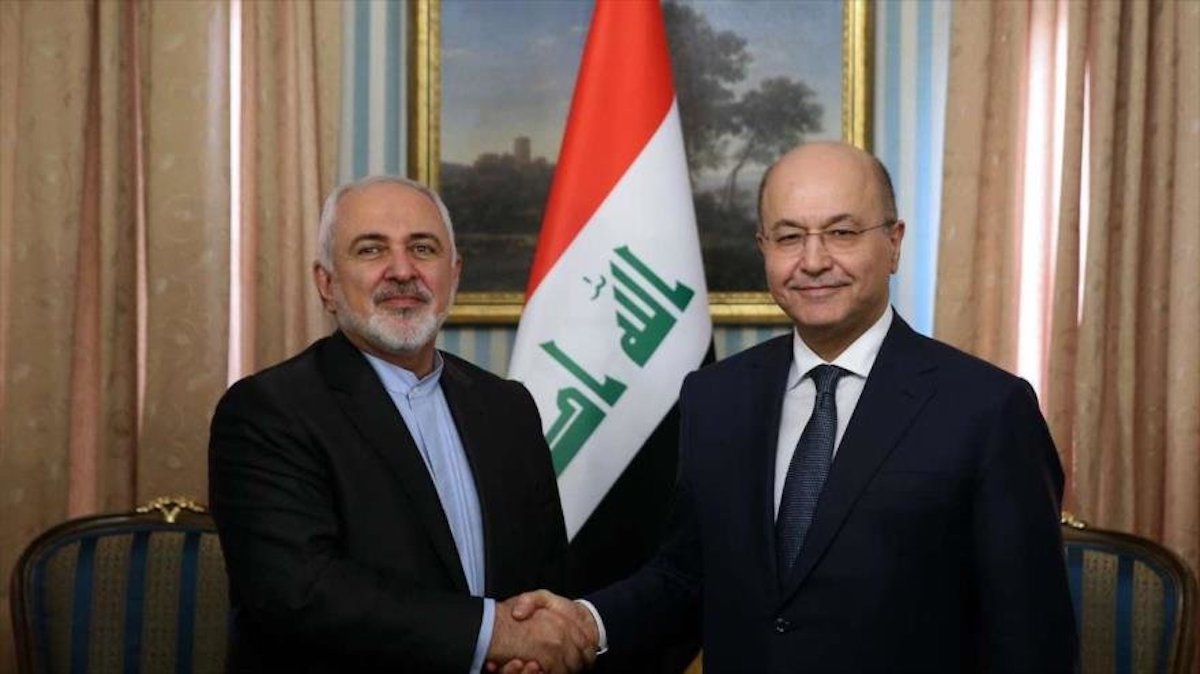
Over the weekend of the 12th and 13th January and on Monday 14th, a number of high-profile officials arrived in Iraq. The Iraqi Foreign Minister, Javad Zarif, arrived in Baghdad on Sunday 13th on a trade mission. During his visit, Zarif met with his Iraqi counterpart, Mohammed Ali al-Hakim, and he is expected to attend a series of trade conferences in Karbala and Sulaimaniyah. This meeting was followed by meetings with the Iraqi President Barham Salih, the Iraqi Prime Minister Adil Abd al-Mahdi, and the Speaker of Parliament, Mohammed al-Halbousi.
Following Zarif’s visit to Iraq, during which he also visited Erbil for talk with officials from the Kurdistan Regional Government (KRG), Zarif announced visa-free travel for Iraqi traders coming to Iran. A statement from the General Customs Authority confirmed that the Iraqi and Iranian Governments had agreed to regulate and simplify customs procedures between the two countries. The changes, which are hoped to streamline trade and business relations between the two countries, have been implemented less than two months after Salih and Iranian President Hassan Rouhani agreed to increase trade from $12 billion to $20 billion every year during Salih’s visit to Tehran last November.
The increased trade and cooperation between the two countries is in defiance of US pressure on Iraq to cut its ties with Iran. The US’ 45-day deadline, which it set in mid-November for Iraq to cease the importation of oil and energy supplies, expired without any tangible action taken by Iraq to cut economic and diplomatic ties with Iran. As the US continues to apply a tough stance on Iranian influence in Iraq, Abd al-Mahdi’s government has appeared less willing to comply with US demands and likely views Iran as a more reliable ally that is able to fulfil Iraq’s post-IS economic requirements.
However, the role of both the US and Iran in pushing back the IS has left the governments of both countries expecting a return on their investment in security as Iraq begins to rebuild and rehabilitate. Indeed, following the announcement of the US’ 45-day deadline, a number of US companies began to bid for contracts throughout Iraq’s construction and energy sector. Nevertheless, the economic consequences of the latest round of Iranian sanctions will only strengthen Iran’s determination to push for greater relations with Iraq. Such a response could, in turn, threaten to trigger a new conflict between the US and Iran as the US attempts to prevent the expansion of Iranian influence further into Iraq. Despite the significant improvement to Iraq’s security following the officially declared defeat of IS more than a year ago, the political wrangling between the US and Iran could prove to be one of the greatest threats to Iraq’s continued recovery.
For more information on this subject and other developments in Iraq, subscribe to our daily intelligence reports and weekly digests.