

On Tuesday 16th October, the Kremlin spokesperson Dmitry Peskov responded to the failure of the militant group Hayy’at Tahrir al-Sham (HTS) to withdraw from the Idlib de-militarised zone (DMZ) following the passing of Monday’s deadline. Peskov stated that although some groups designated as extremists have refused to leave the DMZ, the agreement between Russia and Turkey is still going ahead. Peskov expressed satisfaction with how the Turkish side is working and noted that one shouldn’t expect everything to go smoothly in a situation such as this.
The HTS, for its part, released a statement regarding its position on the Idlib DMZ agreement on Sunday 14th. The statement, which was released one day before the deadline for the implementation of the agreement was due, stated that the delays in responses were due to extensive “consultations” and thanked the efforts of all sides to “protect the liberated areas and prevent its invasion” but warned them to not trust Russian intentions. The statement did not actually state whether the group accepted or rejected the agreement, resulting in divergent interpretations. It is likely that the HTS chose the ambiguous wording to give itself the political flexibility by abiding in the DMZ pragmatically while retaining the appearance of opposing it.
Many pro-Government channels have already interpreted the HTS’ position as a rejection of the DMZ agreement. On Monday 15th, the Syrian Foreign Minister, Walid Moallem, issued a statement supporting the notion of Damascus increasing its pressure on Idlib and noted that if the Idlib DMZ is not implemented, his government has “other options to use”. Moallem’s statement appeared to bring the notion of a Syrian Arab Army (SAA)-led offensive in the region back on the table.
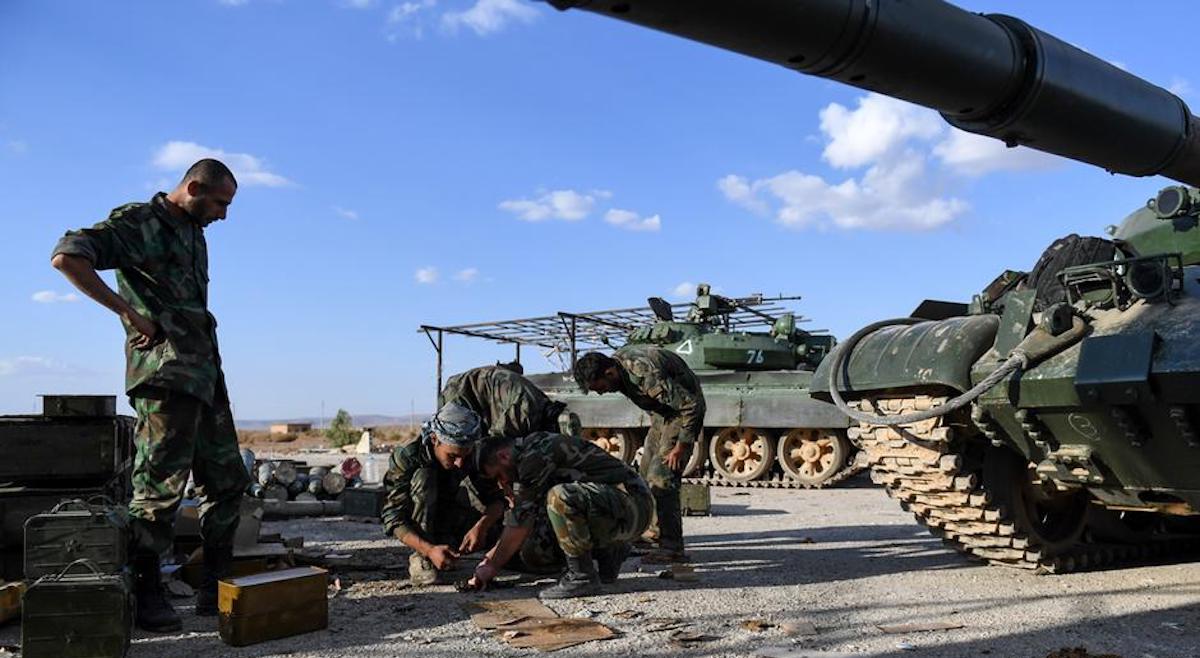
The Syrian Government had already stated that the implementation of the Idlib DMZ was only a temporary solution and rejection any notion of future independence for Idlib or the wider federalisation of Syria. The Government’s statement came in response to the announcement of the formation of the Idlib DMZ by Russia and Turkey last month. Whilst a SAA-led offensive in the region remains unlikely in the near-future, the failure of the HTS to abide by the terms of the DMZ has increased the chances of future confrontation. Indeed, on the eve of the Idlib DMZ agreement deadline, the SAA carried out some of it heaviest shelling on the Greater Idlib in recent weeks. The SAA has regularly used the HTS’ presence in Idlib, in addition to the militant factions Tanzim Hurras al-Din and the Turkistan Islamic Party (TIP), as a pretext to conducting air attacks in the region.
In recent weeks, Turkey has appealed to the HTS to either disband and be absorbed into the National Liberation Front (NLF) coalition, or face possible military action. However, military action against the HTS, which controls an estimated two-thirds of the territory within the Idlib DMZ, could serve to weaken Turkey’s position in the region as a reliable ally to the Syrian Opposition.
For more information on this subject and other developments in Syria, subscribe to our daily intelligence reports.