

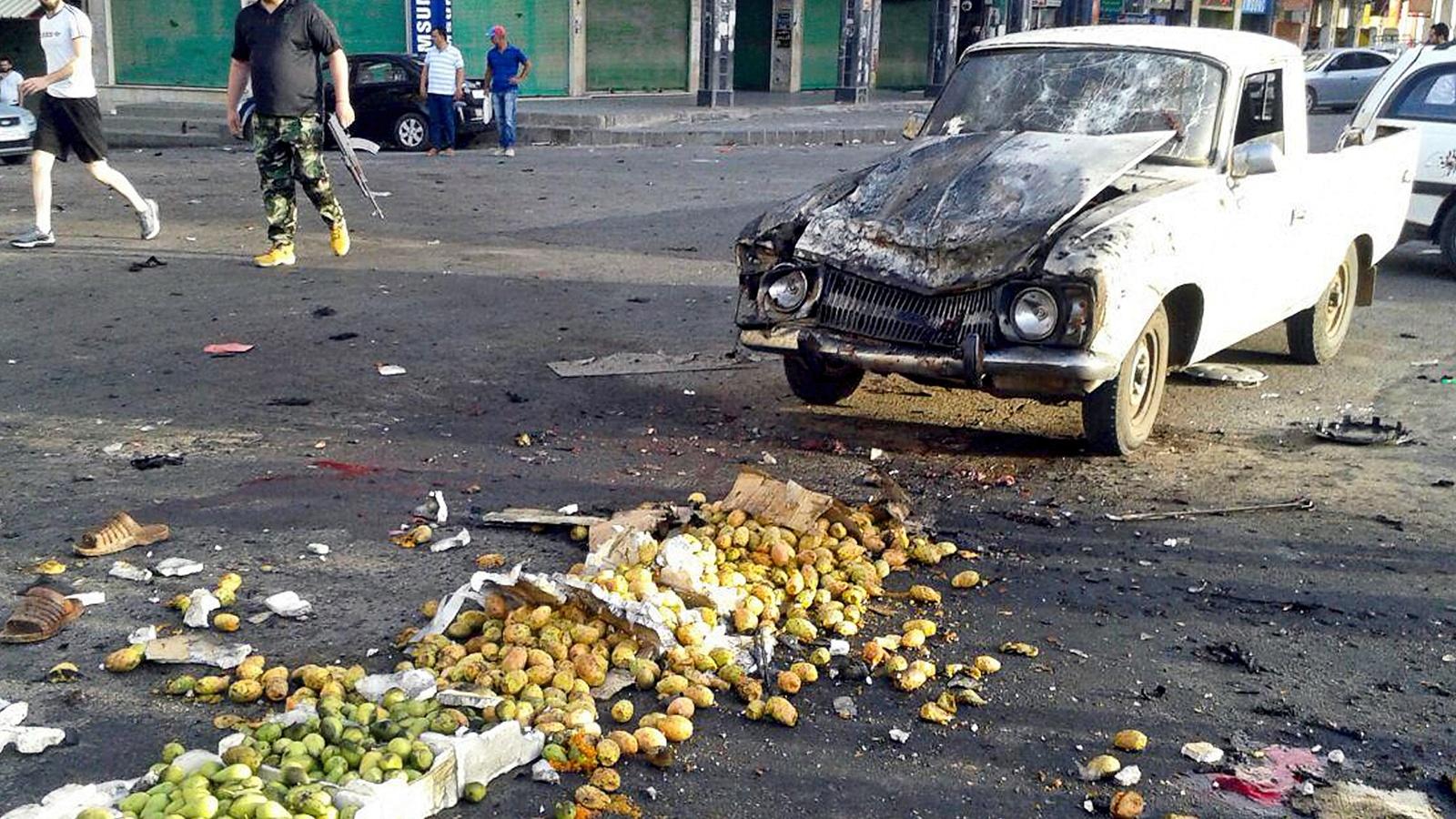
On the morning of Wednesday, July 25th, a series of suicide bombings targeted the districts of Maslakh and Souk districts in Suweida City. The attacks, which were claimed by the Islamic State (IS), were followed by a series of assaults, raids and offensives on the city, as well as on the towns and villages in the central and northeastern countryside of the Suweida Province. The offensive was reportedly facilitated by a large number of loyalist troops being rerouted to Daraa, allowing IS cells around Suweida to regroup and launch the attack.
By Wednesday afternoon, the Syrian Arab Army (SAA), as well as militias belonging to local Druze forces, the Syrian Social Nationalist Party (SSNP) and the National Defence Forces (NDF) secured the villages captured from the IS and repelled the assault on those under attack. Reports from various parts of the province claimed that local civilians attacked IS militants and, in certain cases, lynched them.
The provincial health directorate announced that the final death toll from the IS attack in Suweida has been numbered at 251, in addition to more than 200 who were injured during the attacks. Many of the casualties were civilians of the Druze minority. The number does not include the IS militants killed during the attack, which was numbered at around 100. The high number of civilian casualties was largely caused by the militants going door-to-door in some areas they attacked, killing anyone they encountered.
The attack represents one of the single bloodiest IS attacks to take place in Suweida and, indeed, the entire country. In response, many Syrian and international actors, including the United States’ Department of State, the Free Syrian Army (FSA)-affiliated Maghawir al-Thawra, the Syrian Islamic Council (SIC) and a number of local organisations and officials in Idlib offered condolences to the survivors of the attack and condemned the indiscriminate brutality of the militants.
However, these condolences came with additional criticism of the Syrian Government for failing to deal with the IS pocket in the area. Although the IS pocket in northeastern Suweida had been static since early June, it was well known that the area was still riddled with many IS cells and it highlights the continued danger that the IS still poses in parts of the country.
Due to the scale of the attack, it is likely that the SAA will now focus its attention on clearing the pocket next. Indeed, the Syrian Air Force already conducted a number of airstrikes in the region on Wednesday in response to the attack.
For more information on this subject and other developments in Syria, read our daily report.