

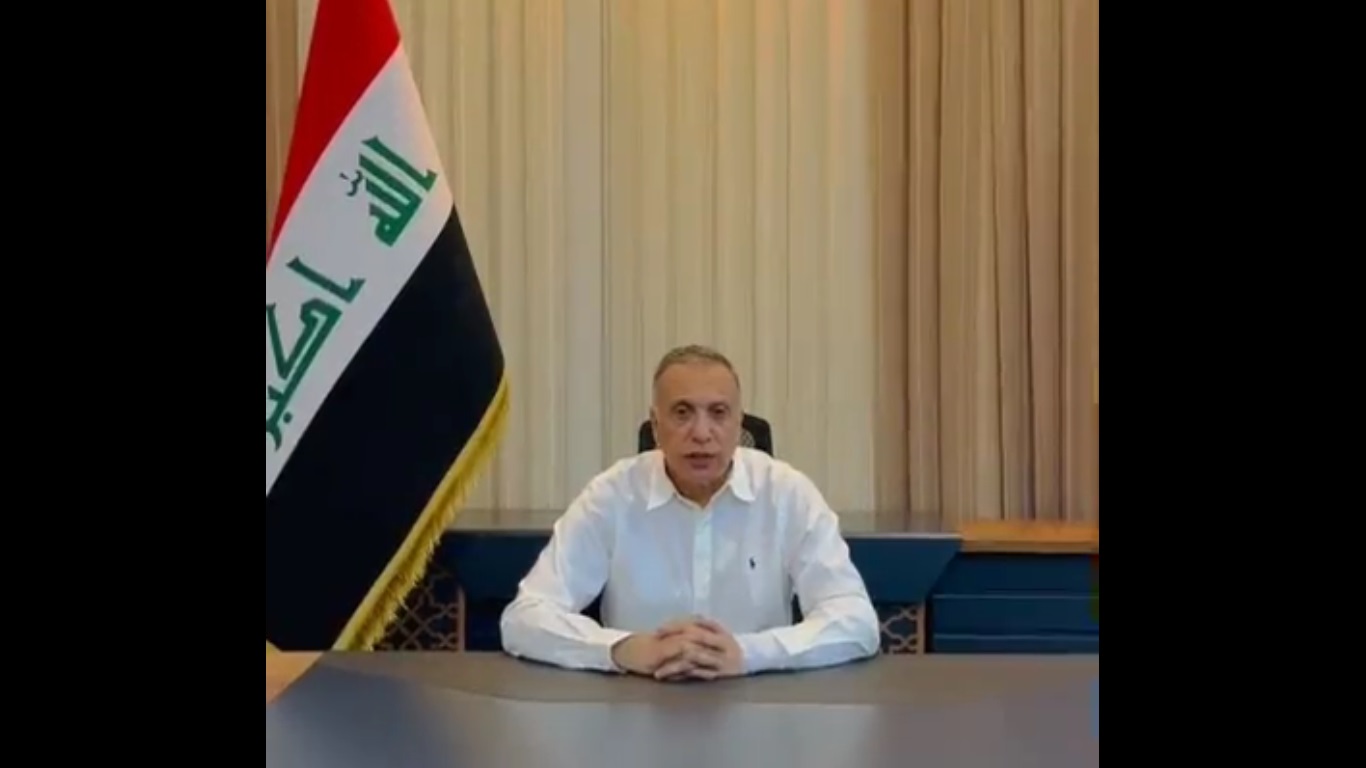
In the early hours of November 7th, 2021, assassins targeted the residence of the Iraqi Prime Minister, Mustafa al-Kadhimi, with explosive-laden drones. Although the Prime Minister survived relatively unscathed, the incident raised fears of growing political violence in the country.
Although no suspects were officially named, pro-Iran factions such as Kataib Hezbollah and Asaib Ahl al-Haq are currently under the greatest suspicion. Should an investigation reveal that these groups were indeed responsible, Prime Minister al-Kadhimi will need to navigate a tightrope of clamping down on the culprits without risking wider political backlash that could push the country to further instability or the chilling of already-precarious political freedoms in the country.
The Iraqi Government will also need to ensure that dealing with the culprits does not distract the Iraqi Security Forces (ISF) from the on-going conflict against the Islamic State (IS) which continues to launch sectarianized attacks in northern Iraq.
What Happened?
The attack took place in the early hours of Sunday in Baghdad’s Green Zone where the Prime Minister’s residence is located, as well as many governmental buildings and embassies. Officials said that three explosive-laden drones were sighted, with two of them shot down by security. The third drone hit its target, injuring several guards before flying off to the Hurriyah District in north-western Baghdad. An unexploded rocket was also found in the area.
Who is Responsible?
So far, no group has taken responsibility for the attack. Furthermore, officials have so far declined to officially name any names, attributing the attack to “criminal armed groups”, with an investigation pending.
Numerous actors can be suspected of the attack. The IS, although diminished, continues its insurgency in the north, having conducted a bloody attack in Diyala late-October. However, the group has remained capable of attacks mostly on soft-targets and has not carried a high-profile attack in Baghdad in years. Furthermore, the group often claims responsibility for its attacks without much delay.
Another possible, albeit unlikely, culprit consists of individuals linked to the Iraqi protest movement. The movement was responsible for the Iraqi Government setting up the recently-concluded elections and are known to be deeply dissatisfied with the political status-quo. However, the movement does not have a history of political violence, especially on such a scale. Even accounting for fringe members carrying out lone attacks, targeting the Prime Minister would be beyond the movement’s capabilities and goals.
The last group under suspicion consists of Iranian-linked political parties and militias. These two groups, as well as the wider pro-Iranian Fatah Alliance, have been vocally dissatisfied with the election results and have made numerous allegations of fraud. Indeed, members and supporters of the Fatah Alliance have been camped out outside the Green Zone. On Friday, just two days before the assassination attempt, clashes took place between the protesters and the security forces, with two protesters reported dead.
While no official accusations have been made, the suspicion seems to be focused on Kataib Hezbollah – which was implicated in the July 2021 attack on the Green Zone – and Asaib Ahl al-Haq, whose leader, Qais al-Khazali, vowed revenge on the Prime Minister for Friday’s clashes just hours before the attack. Indeed, citing insiders speaking on condition of anonymity, several regional news outlets noted that the drones and explosives were models commonly used by Iranian-supplied forces.
The parties under suspicion meanwhile appear to be working to distance themselves from the event. In a statement, al-Khazali condemned the attack, but included the possibility that it may have been accidental or not “real”, perhaps hinting that the incident was a false flag operation conducted to cast doubt on him and his supporters. A prominent member of Kataib Hezbollah made similar insinuations, suggesting that the attack was orchestrated by al-Kadhimi himself.

Implications for Iraq
Although Iraq is no stranger to political violence, an assassination attack targeting the Prime Minister is nevertheless a rare development and has wide-ranging implications.
Most significantly, the nature of the attack will almost certainly legitimise a clampdown against the suspects and their affiliates. Should pro-Iranian groups be named suspects, this may legitimise the disarming of groups such as Asaib Ahl al-Haq and Kataib Hezbollah, forcefully if necessary. Given that al-Kadhimi has come to power on a more nationalistic platform and has closer ties with Washington than with Tehran, such a move is almost certainly politically open to him. The fact that nationalist politicians such as the prominent Shia cleric, Muqtada al-Sadr, also made significant gains in the elections at the expense of Iranian-backed groups, al-Kadhimi may find plenty of political backing for such a course of action.
However, despite an enabling political environment, al-Kadhimi will need to tread carefully. Given al-Khazali’s questions on whether the attack was real or not, it is possible that he and his supporters will try to frame a potential clampdown as al-Kadhimi performing Washington’s bidding through a false flag attack. If Fatah’s voter-base is galvanised by such accusations, the country may see further protests, rioting and clashes, further destabilising the political environment. With high-ranking leaders like al-Khazali already sowing doubts about the nature of the attack, this sets a dangerous process for further conspiracy theories to develop aimed at undermining the credibility of the government.
Ensuring that legitimate politicians and activists are not targeted in any clampdowns will be necessary in preventing political instability. Such wide-sweeping clampdowns would not only boost the narratives and support of factions hostile to the Iraqi Government, it would also have a chilling environment on the already-fragile space for political expression in the country. In the medium-to-long term, such sweeping political clampdowns can come to target any dissidents including the protest movement itself.
Lastly, political and military violence could benefit actual insurgent groups, especially the IS, which is already looking to stoke tensions through targeted sectarianized attacks in northern and western Iraq. Although the ISF has made great strides targeting the group’s leadership, continued attacks by the group indicate that any progress remains fragile. Under such conditions, an escalation of infighting could have deeply corrosive effects on the wider security ecosystem.
Iraq has made great progress towards re-establishing a modicum of political stability and rule of law in recent years after the territorial defeat of the IS, despite the many and mounting challenges ahead. Many Iraqis are understandably concerned that this weekend’s events could lead to a “return to chaos” that defined much of the 2000s. However, the country has not yet crossed an irreversible threshold, nor does it need to.