

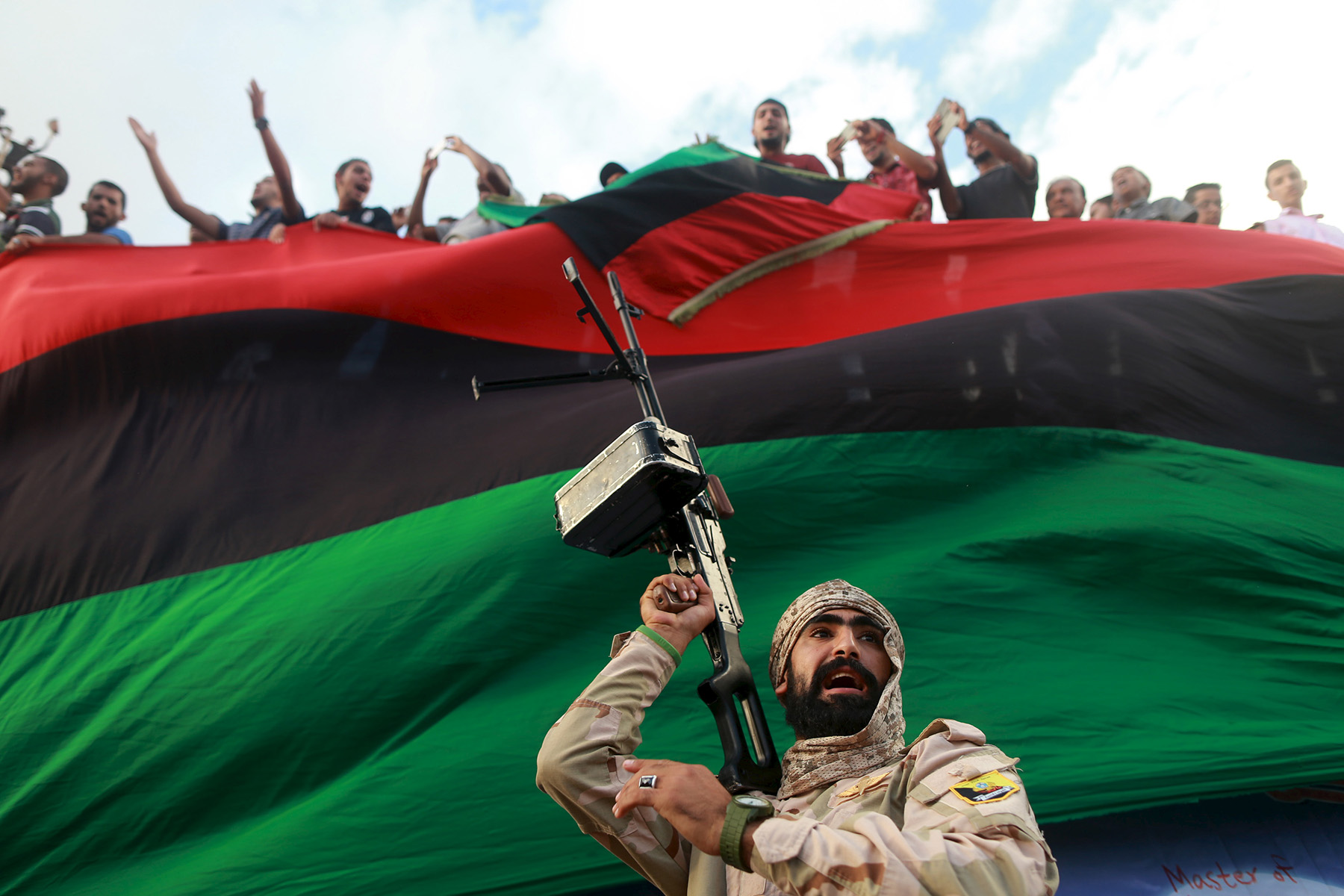
At the beginning of this week, forces loyal to the United Nations-backed Government of National Accord (GNA) successfully repelled a second wave of attacks in Tripoli launched by the Libyan National Army (LNA), which is affiliated to the Tobruk-based House of Representatives (HoR). This week’s clashes, which took place in the southern suburbs of Ain Zara, al-Khula and Wadi al-Rabaie, around 12 kilometres from the city centre, resulted in the withdrawal of LNA forces from Tripoli’s southern districts and the capture of destruction of military hardware by the GNA. An estimated six fighters loyal to the GNA were killed during the clashes, as well as a further 25 LNA casualties.
This week’s failed offensive by the LNA is the latest in its six-month campaign to seize control of much of central and western Libya. Despite the campaign’s relative success in its first three months, which included the LNA’s seizure of Libya’s largest oil fields, since April its advance has stalled in response to the GNA-led counter-offensive in Tripoli, known as Operation Volcano of Rage. Nevertheless, the LNA, which is led by Field Marshall Khalifa Haftar, has attempted to weaken the GNA’s military capabilities in recent weeks through airstrikes on alleged ammunition depots. On Wednesday 3rd July, one such airstrike destroyed a migrant detention centre in central Tripoli, killing an estimated 53 people and wounding a further 130.
Following the airstrike, which the UN declared a war crime, the United States increased its pressure on the LNA’s backers, which include the UAE, France and Egypt, to cease its material support for Haftar. Indeed, the UAE has since faced the threat of a US congressional ban on US arms sales amid accusations that US-supplied weaponry has been transferred to the LNA by Emirati authorities. This has come as the UAE has begun winding down its operations in Yemen, which could lead to its greater involvement in Libya in support of the LNA. The HoR Minister of Foreign Affairs, Abdul Hadi al-Hweij, for his part, accused the GNA of using detained migrants as human shields in an interview. He further made an unverified claim that the GNA had stored munitions in the detention centre targeted earlier this month.
Nevertheless, the US has maintained an ambiguous position towards the HoR, with US President Donald Trump previously providing Haftar with his verbal support in a phone call in April. This could suggest that, despite the UN’s unabated support for the GNA, the HoR’s greater control over Libya has led to increased international support for the Tobruk-based government. As a result, the launch of a new peace initiative in June by the GNA Prime Minister Fayez al-Sarraj, which would include a new round of political negotiations, is likely to ensure the survival of the GNA and its militia backers at the expense of greater legitimacy afforded to the HoR and Haftar. This approach may encourage the two sides to abide by a short-term ceasefire, but it will not take any steps towards consolidating the country’s numerous militia groups under a single nationwide government.
Image: Reuters